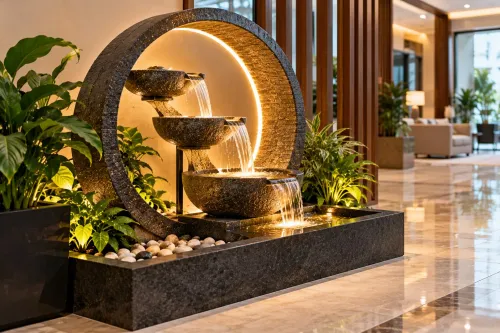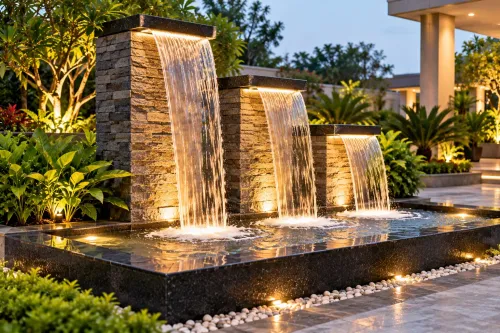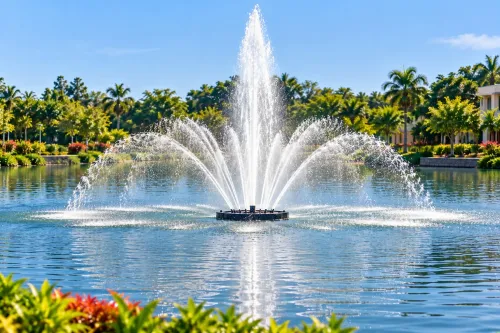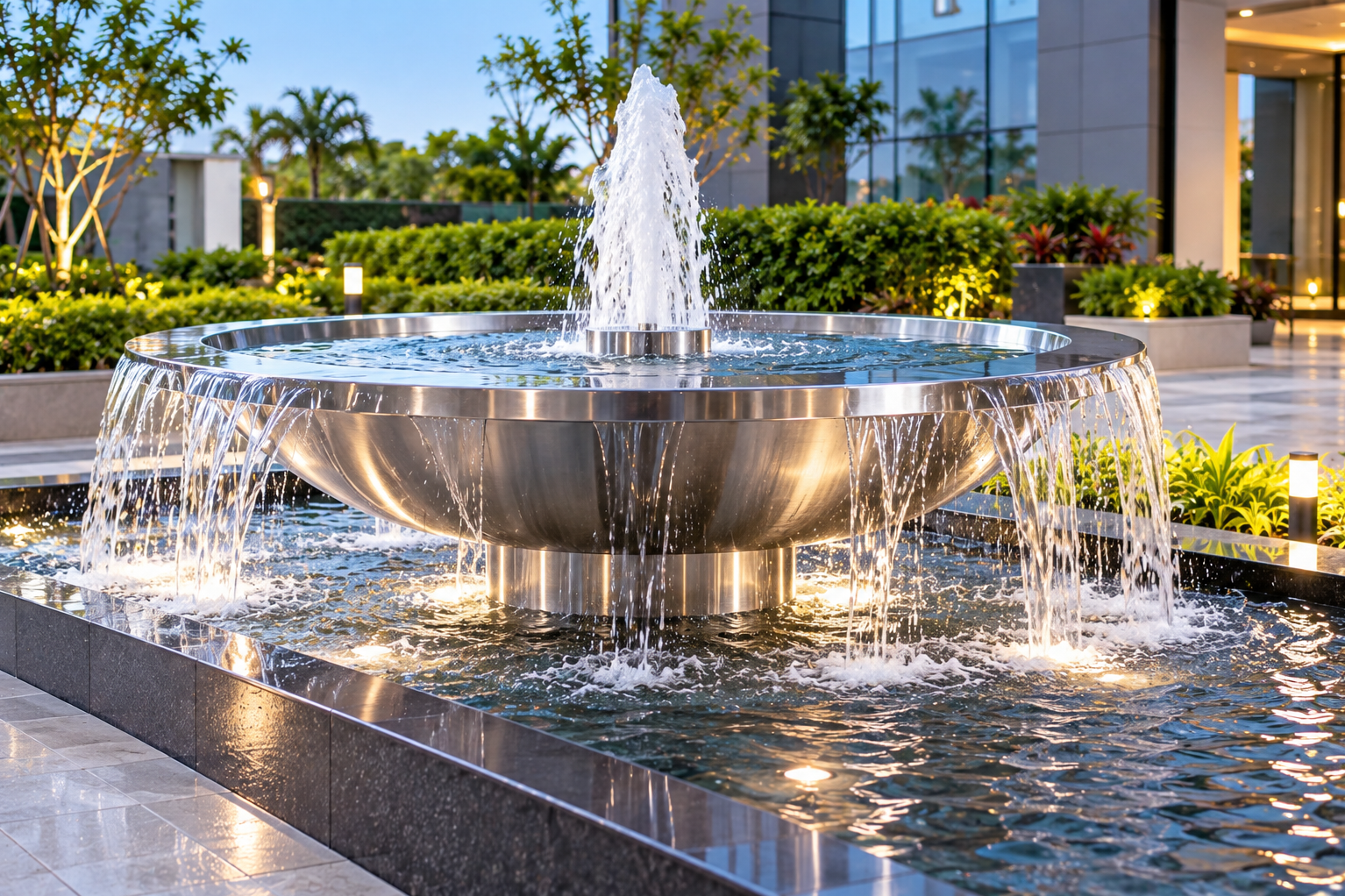
Material selection plays an important role in fountain performance and appearance, particularly where components remain continuously exposed to circulating water. Stainless steel fountains are often considered for contemporary architectural, commercial, hospitality, institutional, and landscape projects because metal can support clean forms and precise fabrication.
However, selecting a fountain provider should involve more than asking for a stainless steel structure and comparing quotations.
Start With the Project Requirement
Before approaching a manufacturer, define what the fountain needs to achieve.
Prepare basic information such as:
- Installation location
- Indoor or outdoor use
- Available dimensions
- Desired water pattern
- Approximate fountain height
- Lighting requirement
- Architectural style
- Expected operating hours
- Project completion stage
The more clearly the requirement is defined, the easier it becomes to compare proposals meaningfully.
Ask What Parts Use Stainless Steel
The phrase stainless steel fountain can describe different configurations.
The visible body may be fabricated from stainless steel, while nozzles, pipes, fasteners, supports, or other components may use different materials depending on the system.
Instead of relying on a broad product description, ask for clarity about material specifications for important components.
This makes quotations easier to evaluate.
Evaluate Fabrication Quality
Metal fountain structures often contain joints, edges, supports, openings, and mounting points that influence the final appearance.
For architecturally visible installations, fabrication quality can be particularly important.
Review whether the proposed construction suits the dimensions and water load of the feature. Surface finish should also complement surrounding architecture.
Look Beyond the Structure
A fountain is a complete circulation system.
Even an attractive stainless steel body will not perform as expected without correctly planned pumps, piping, nozzles, filtration, controls, drainage, and lighting.
When comparing manufacturers, evaluate the complete fountain scope rather than focusing only on the visible fabricated element.
Ask About Customization Capability
Many commercial and architectural projects cannot use fixed standard dimensions.
The manufacturer may need to adapt:
- Fountain length and width
- Water pattern
- Jet arrangement
- Basin integration
- Lighting positions
- Pump configuration
- Structural form
Customized manufacturing becomes especially useful for hotels, resorts, corporate buildings, hospitals, educational institutions, commercial establishments, and real estate developments where the fountain needs to fit an existing design.
Review Previous Application Experience
A provider familiar with different fountain environments is better positioned to understand how requirements vary between a residential courtyard and a public landscape.
Ask about experience with project categories similar to yours and discuss how maintenance, water movement, and equipment access were handled.
For Coimbatore projects, local coordination can also be important when architects, landscape designers, civil contractors, and fountain teams need to resolve site details during execution.
Confirm Site Readiness Before Installation
Installation should begin only after the necessary civil and utility provisions are coordinated.
Typical readiness checks include:
- Final dimensions confirmed
- Basin construction completed as required
- Waterproofing addressed
- Electrical provisions available
- Drainage planned
- Plumbing routes coordinated
- Equipment space accessible
Early review can prevent modifications after finished surfaces are installed.
Evaluate Support Requirements
Fountains contain operating components that require periodic inspection.
Discuss routine cleaning, pump access, nozzle maintenance, lighting access, and general operating procedures before finalizing the system.
Royal Fountains & Equipments is based in Coimbatore and operates in the water fountain manufacturing and landscape equipment field. For customers evaluating a project-specific fountain, discussing dimensions, intended effects, architectural requirements, and installation conditions can help determine an appropriate configuration.
Choosing stainless steel fountains should therefore be based on the complete project rather than material name alone. Fabrication, hydraulic performance, component selection, customization, maintenance access, installation coordination, and suitability for the site all matter. A carefully evaluated fountain system is more likely to deliver the intended architectural effect while remaining practical for long-term operation.
Keywords