The best indoor fountain is chosen around the room, not placed wherever a product photograph leaves space: traffic, sound, water access, cleaning and electrical safety all shape the result. By the end, you can match a fountain type and scale to each setting, plan its services, and specify a feature that remains attractive without becoming a maintenance problem.
Key takeaways
- Match fountain scale and sound to how each room is used.
- Measure clearance, ceiling height, sockets and service access before ordering.
- Use splash control, non-slip flooring and safe cable routing around water.
- Specify filtration, cleaning access and replacement parts in the supplier brief.
Room-by-room indoor fountain ideas that suit the way people use the space
Match the fountain to how people move, work and rest in the room. These indoor fountain ideas keep water visible without allowing noise, spray or the installation itself to disrupt the space.
| Space | Suitable fountain idea | Placement and control |
|---|---|---|
| Home entryway | Shallow wall veil or narrow floor-standing feature | Keep the walking route fully clear; do not let the basin project into the doorway. |
| Living room | Tabletop fountain or low basin-style feature | Use a stable console, and position the water away from children, pets and busy circulation. |
| Bedroom | Small submerged-return fountain | Choose quiet operation, no bright lighting and no splashy jet. |
| Office reception | Wall-mounted or floor-standing office reception fountain | Place it behind the desk or beside seating, leaving the queue and accessible route unobstructed. |
| Waiting area | Low-noise sheet flow | Add visual movement without competing with conversation. |
| Hotel lobby | Entrance-visible wall or floor feature | Avoid a wet or projecting basin that makes guests walk around it. |
| Restaurant | Enclosed or splash-controlled feature | Use cleanable surfaces and separate the fountain from food-preparation areas. |
| Spa | Restrained wall veil, rill or stone-look cascade | Include ventilation and cleaning provisions for the added humidity. |
Avoid mist, atomizing nozzles and forceful sprays in enclosed guest areas. They increase aerosol, evaporation, noise and splash-control demands; a quiet sheet flow or submerged-return design is easier to manage. A home indoor fountain should also have a nearby concealed socket and spill-resistant base.
Choose the fountain format and size from the room’s physical limits
Choose the format by checking load, footprint, access, sightline and visitor movement before choosing a style.
| Option | Physical requirement | Best use |
|---|---|---|
| Tabletop fountain | Level, load-bearing surface, nearby concealed socket and spare surface around the feature | Console, reception counter or sideboard |
| Wall-mounted fountain | Wall capacity for filled weight, waterproofing, pipework and an access panel | Narrow circulation zones and architectural walls |
| Floor-standing fountain | Separate viewing zone and service zone | Entrances, receptions and waiting areas |
| Basin fountain | Floor area, concentrated structural loading, basin fountain clearance and reliable overflow control | Open lounges, lobbies and courtyards |
| Custom fountain | Measured niche, stair, counter or water-wall geometry | Spaces where a standard footprint will not fit |
Treat tabletop fountain size as a circulation decision, not just a visual one. Keep visitors from brushing against the vessel, and place the water surface high enough to view without leaning over it. A viewing distance of roughly 600–1,200 mm works as a starting point.
For a public feature, preserve at least 900 mm of continuous clear route where the project follows the 2010 ADA Standards; confirm the adopted local accessibility rules. Check the route after adding guards, queues and maintenance access.
Calculate water mass separately. One litre weighs about 1 kg, so a 300-litre basin adds about 300 kg before the vessel, stone, pump, finishes and any live load. Have the structural team review concentrated loading rather than judging safety from floor area alone.
For larger designs, test the sightline from the entrance and seating before fixing the height.
Plan sockets, spill control, access and safe circulation before installation
Before the fountain reaches site, put every water, electrical, service and circulation point on the drawing; a watertight basin still spills when airflow, blocked equipment or overfilling defeats control.
1. Mark the pump socket, refill point, drain, isolation valves, strainer or filter and maintenance access. Provide a cleanable sump and an access panel that does not require removing bonded stone or architectural finishes.
2. Route cables inside protected conduit or a guarded service void. Never run them across a floor or behind a loose tabletop, and keep water away from sockets, computers, point-of-sale equipment and hotel-room electronics.
3. Specify a level, load-bearing base and a non-slip surrounding floor. Include a visible or piped overflow, high-level shutdown, secondary containment where practical, and a leak sensor linked to an alarm or building-management system.
4. Treat fountain spill protection separately from waterproofing. HVAC air can push water across adjacent flooring; a blocked strainer, overfilled sump or failed level-control valve can defeat a watertight basin.
5. Add guards or recessed edges where children, pets, guests or employees could touch the water or destabilise the vessel. For accessible fountain placement, keep the basin, queue and maintenance hatch from narrowing the locally required route; U.S. projects should check the 36-inch continuous clear-route guidance in the 2010 ADA Standards.
6. Complete fountain electrical planning before ordering equipment. Have the electrical engineer classify the wet location and equipment; in the U.S., NEC Article 680 Part V governs fountain bonding, grounding, wiring and ground-fault protection. Confirm RCD or GFCI fountain protection under the adopted local code.
Control sound, humidity and water quality for the occupants
A quiet indoor fountain is selected by its finished-room sound, not the pump nameplate dBA alone. Spillway shape, drop height, entrained air, grate vibration, pump mounting and hard walls decide what occupants hear.
For bedrooms, meeting rooms and quiet hotel spaces, use a submerged return or quiet sheet flow, isolate the pump from the structure and test the intended flow after installation.
A dramatic jet or atomizing nozzle belongs in a large, well-ventilated atrium rather than a guestroom. Exposed water increases HVAC latent load; evaporation rises with water area, water temperature, air movement and splashing. Track room humidity for effective fountain humidity control: target 30%–50% relative humidity, and treat visible condensation as an immediate warning.
A Legionella decorative fountain risk comes mainly from aerosol generation, not standing water alone. Do not install decorative fountains in patient-care areas; elsewhere, assign an owner and document inspection, cleaning and shutdown procedures.
Use this control checklist:
- Choose a quiet sheet, wall veil or submerged return instead of a spray, mist or turbulent jet where people sit nearby.
- Minimise dead legs, stagnant branches and unreachable cavities in the basin and pipework.
- Do not treat UV as a substitute for cleaning or a lasting disinfectant residual.
- Test source water and material compatibility; hard water fountain scale can block nozzles, glass, sensors and pumps, while softened water can still contain high dissolved solids.
- Shut down, drain and clean the feature when inspection finds odour, slime, abnormal noise or condensation.
Build a maintenance brief and compare suppliers on serviceability
Specify the fountain as a managed water system, not a decorative object. Your fountain supplier checklist must require a cleanable sump, screened make-up water, drain-down capability, an accessible pump, isolation valves and an access panel that opens without dismantling bonded stone or architectural finishes.
- Facilities staff top up water daily and record the level; shut down for low-level alarms.
- Housekeeping wipes mineral deposits weekly; shut down before entering the sump.
- Engineering cleans the pump intake and strainer monthly; isolate power first.
- Engineering changes water quarterly, or sooner if it clouds, smells or supports algae.
- Staff check LED lights weekly; isolate power before opening wet compartments.
- Engineering inspects seals monthly and replaces damaged seals during a planned shutdown.
- The named water-system owner removes algae or odour immediately and documents the corrective cleaning.
Plan a piped drain for a hotel lobby so staff never carry buckets through guest areas. Ask how quickly the supplier can replace an impeller or seal, and require a cleanable method for every internal surface.
Compare the proposal on serviceability, not appearance alone.
| Feature | Require | Supplier evidence |
|---|---|---|
| Water path | Minimal dead legs and unreachable pipe volume | Flow diagram |
| Overflow | Visible or piped route to a safe drain | Overflow detail |
| Leak control | Sensor and high-level shutdown | Test procedure |
| Cleaning | Reachable sump, strainer and surfaces | Cleaning method |
| Access | Panel without finish removal | Maintenance drawing |
At handover, confirm viewing distance, operating noise, refill frequency, water-treatment recommendation and test results. Royal Fountains & Equipments - 08043694426 belongs in the comparison when a custom indoor fountain must fit a measured footprint; request filled weight, service access, electrical points and drainage drawings for design-team approval.
Related products
 | Indoor Fountains We specialize in offering a comprehensive array of Indoor Fountains to our clients across the domestic market. View product → |
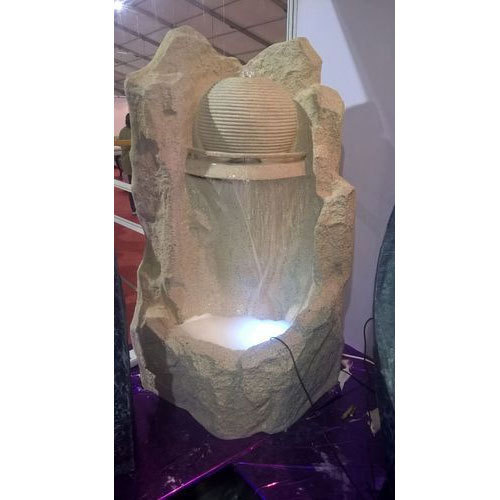 | Indoor Fountains Manufacturer This fountain perfectly crafted with combination of durable poly resin, stone powder and fiber glass for lasting quality creates a realistic, natural... View product → |
Frequently asked questions
Which indoor fountain suits a living room, office or hotel?
Choose a quiet wall fountain or compact floor feature for homes, a low-splash feature for offices, and a durable, serviceable centrepiece for hotels.
How do you choose the right indoor fountain size?
Measure the available footprint, height, circulation clearance and maintenance access before selecting the fountain format and dimensions.
What should you plan before installing an indoor fountain?
Plan a nearby electrical socket with protection, spill containment, non-slip surfaces, safe cable routing and clear access to the pump and tank.
How can you control noise, humidity and water quality?
Select a quiet pump, prevent overspray, ventilate enclosed areas, use suitable filtration and set a cleaning schedule for the water system.
What should an indoor fountain maintenance brief include?
List cleaning frequency, water treatment, pump access, filter replacement, drainage, spare parts and the supplier’s response process.
Related products
 | Indoor Decorative Fountains Tabletop fountain welcomes peace happiness serenity in home. It is made of a durable and lightweight poly-resin but with a ceramic look finish. View product → |
 | This indoor table top water fountain suitable for both domestic and commercial interior decor. The water comes out from the middle of the fountain. View product → |
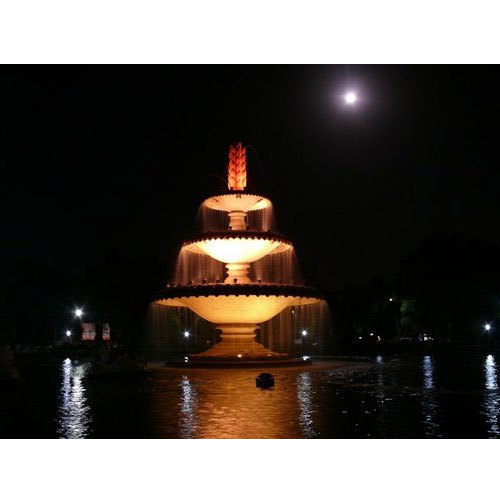 | / garden fountain : this beautiful fountains are the most pleasant sight for your eyes, ears & of course for your soul too. View product → |
 | Decorative fountain Decorative Indoor FRP Fountains T his stunning fountain features the serene image of a silver toned Buddha meditating against a wall. View product → |