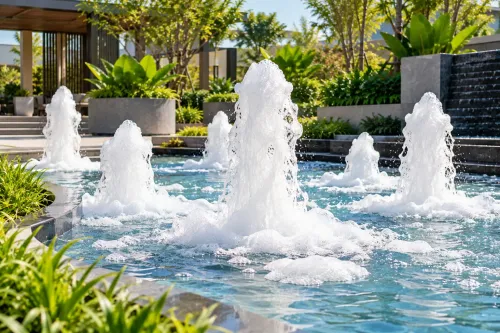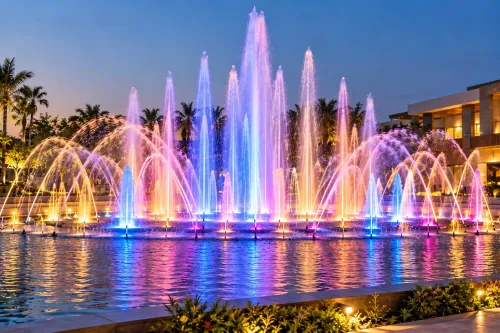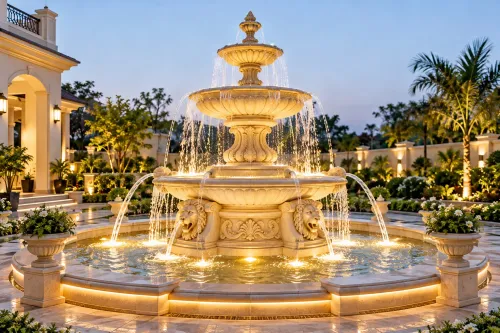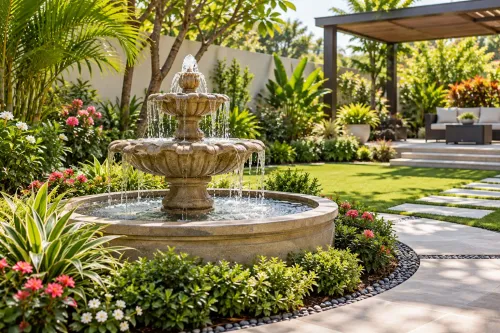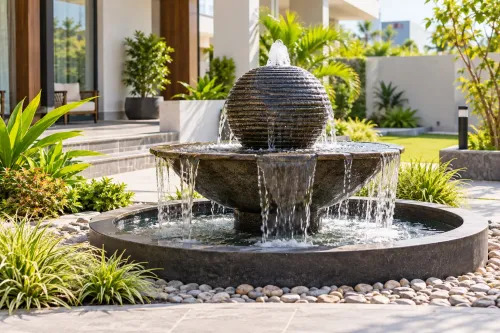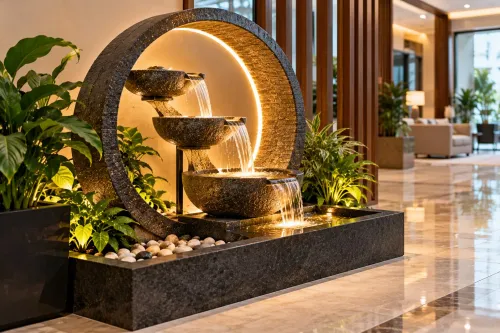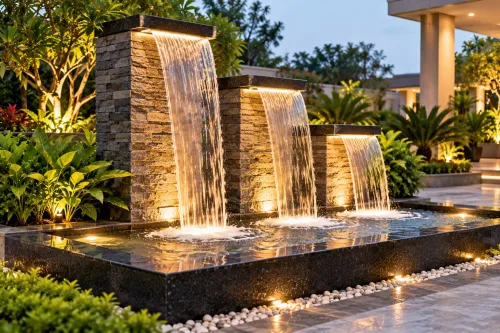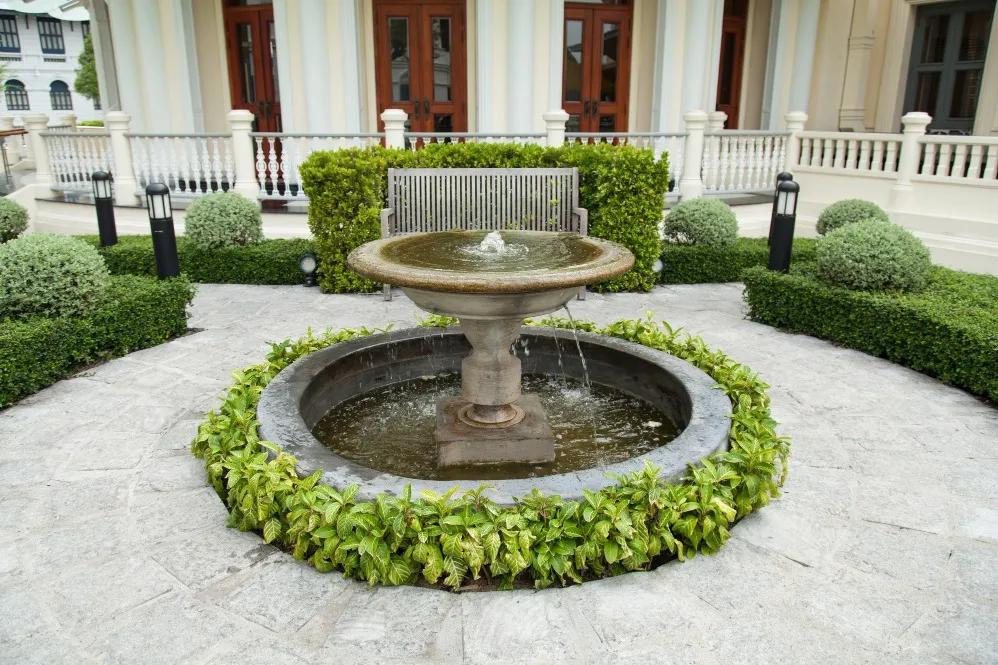
A fountain can transform a garden, courtyard, entrance, terrace, or interior corner, but successful residential fountains require more planning than simply choosing an attractive design.
Homeowners in Coimbatore often have very different spaces available, from compact courtyards to larger landscaped properties. Avoiding a few common planning mistakes can make the fountain easier to enjoy and maintain.
Choosing a Fountain That Is Too Large
Scale is one of the first considerations.
A tall, wide fountain can overwhelm a compact garden and may create excessive splashing. A very small fountain can look visually lost in a large lawn or entrance.
Measure the available space and consider the distance from which the fountain will usually be viewed.
Leave enough surrounding room for movement and maintenance.
Ignoring Splash Distance
Water rarely remains exactly where drawings suggest.
Wind, jet height, nozzle pattern, and water pressure can influence splash behaviour. Outdoor fountains placed too close to entrances, windows, seating, or frequently used walkways may create inconvenience.
In Coimbatore's outdoor environments, local wind exposure should be considered before choosing tall or fine water jets.
Selecting Only by Appearance
A fountain may look impressive in photographs while being unsuitable for the intended location.
Ask practical questions:
- How much water movement does it create?
- How loud is the water effect?
- How often will it operate?
- Is lighting required?
- Can the equipment be accessed?
- What routine cleaning is needed?
Appearance should be balanced with everyday usability.
Forgetting About Leaves and Debris
Placing a fountain directly below trees can create an attractive natural setting, but it can also increase cleaning requirements.
Leaves, flowers, seeds, and other organic material may enter the basin and affect filters or nozzles.
If the fountain must be positioned near vegetation, maintenance requirements should be considered during design.
Overlooking Electrical Planning
Pumps and fountain lighting require safe electrical provisions.
Electrical work near water should be planned appropriately rather than relying on temporary arrangements after the fountain is installed.
The location of controls should also be convenient and protected according to the installation requirements.
Making Maintenance Difficult
Pumps, nozzles, filters, lights, and plumbing components may require periodic attention.
A visually clean design is desirable, but completely hiding equipment without providing service access can create problems later.
Good residential fountain design conceals technical elements while still allowing them to be reached when necessary.
Choosing the Wrong Water Sound
Water sound is subjective.
A strong cascade can be relaxing in a garden but may be too prominent near a bedroom or quiet indoor space. Smaller bubbling or sheet-flow features can create a gentler acoustic effect.
Consider when the fountain will operate and where people spend time around it.
Treating Lighting as an Afterthought
Many residential fountains are enjoyed most during evenings.
Planning lighting during the initial design stage allows fittings to be positioned more effectively and cables to be integrated neatly.
Subtle illumination can often create a more refined result than excessive colour or brightness.
Ignoring the Surrounding Landscape
A fountain should look connected to its setting.
Materials, planting, paving, wall finishes, and architectural style should influence the design. Contemporary homes may suit clean geometric water features, while landscaped gardens can support more natural or traditional forms.
Royal Fountains & Equipments in Coimbatore works with indoor and outdoor fountain requirements where size, water pattern, and configuration can be adapted to different environments.
Well-planned residential fountains should feel natural within the property and remain practical after installation. Avoiding mistakes related to scale, splash, equipment access, lighting, and maintenance helps ensure the water feature contributes to the home rather than becoming difficult to manage.
Keywords