Water has a unique ability to change how a space feels. A well-designed landscape may already include plants, pathways, seating, lighting, and architectural elements, but adding water feature fountains can introduce movement, sound, reflection, and a stronger visual identity.
Across Coimbatore and other parts of Tamil Nadu, water features are increasingly considered for hotels, resorts, residential developments, educational campuses, hospitals, commercial properties, public spaces, and institutional landscapes. The right fountain should not simply fill an empty area. It should become part of the overall landscape composition.
What Is a Water Feature Fountain?
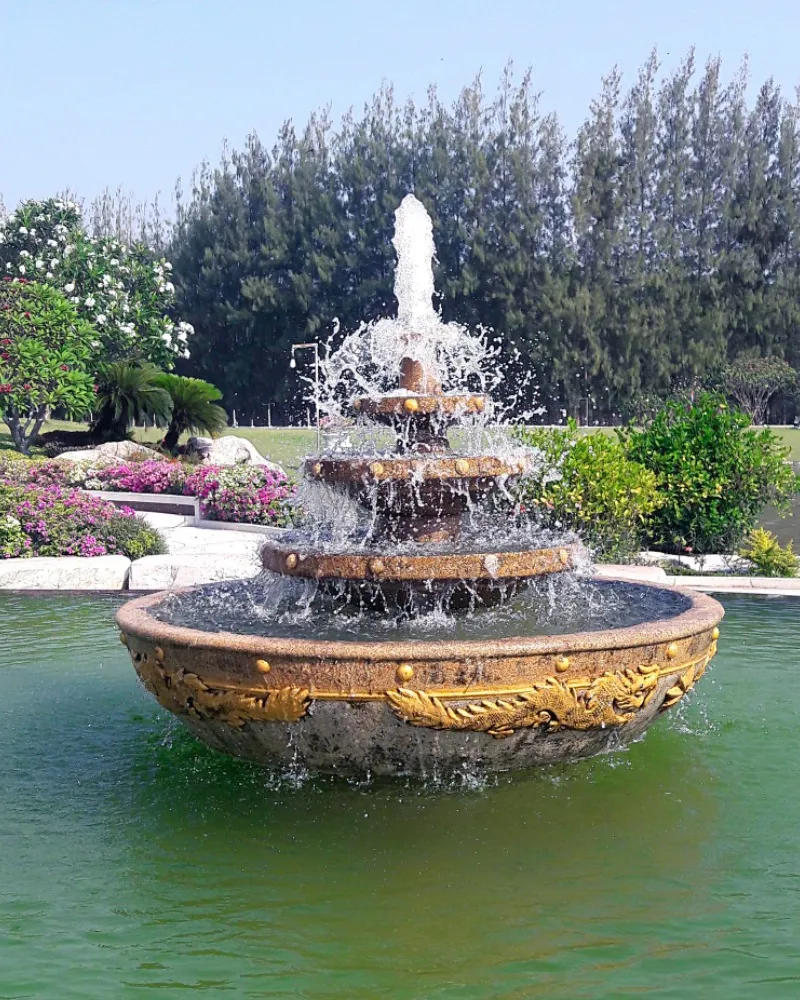
A water feature fountain is a designed system that circulates water to create a particular visual or acoustic effect. Depending on the space, the design may involve vertical jets, cascading water, wall-mounted flows, bubbling effects, illuminated patterns, or combinations of several elements.
Unlike purely decorative objects, fountains introduce continuous movement. This makes them useful as focal points in locations where designers want to create visual interest without overcrowding the landscape.
Why Water Features Influence the Character of a Space
One of the main advantages of moving water is its ability to attract attention naturally.
In a large hotel entrance, for example, a fountain can establish a memorable arrival experience. In a landscaped courtyard, gentle water movement can create a calmer atmosphere. Within a commercial development, a carefully positioned feature can help turn an otherwise unused open area into an identifiable gathering point.
Water features can contribute through:
- Visual movement and reflection
- Pleasant background water sounds
- Stronger landscape focal points
- Enhanced evening ambience with lighting
- Better integration between architecture and outdoor areas
- Distinctive character for entrances and courtyards
The effect depends heavily on scale and positioning.
Fountain Scale Should Match the Landscape
A common mistake is selecting a fountain primarily because its design looks attractive in isolation.
The fountain also needs to suit the dimensions of the site.
A very small fountain can disappear visually within a large commercial forecourt, while an oversized installation may dominate a compact residential courtyard. Architects and landscape designers generally need to consider viewing distance, surrounding building height, pedestrian movement, landscape proportions, and available water basin dimensions.
This is particularly important for projects in developing urban areas around Coimbatore, where properties can range from compact residences to expansive institutional and hospitality campuses.
Water Movement Matters as Much as Appearance
Different water patterns create different experiences.
High jets produce a dramatic visual effect and can suit larger open spaces. Cascading water provides a softer appearance. Sheet-flow systems can complement contemporary architecture, while multiple smaller jets can create more detailed visual patterns.
The sound should also be considered.
A fountain intended for a hospital courtyard may require a different water effect from one installed at an amusement park or commercial attraction. The intended environment should therefore guide the design rather than selecting a fountain purely on visual appeal.
Lighting Extends the Experience After Sunset
Outdoor water features often look completely different at night.
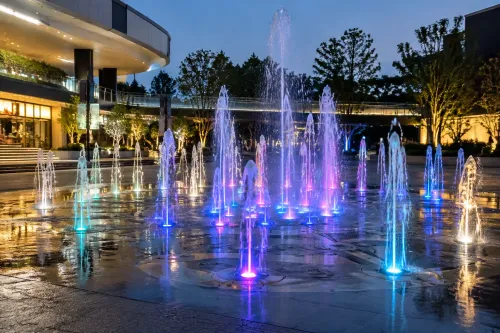
Strategically positioned lighting can reveal water movement, highlight individual jets, illuminate cascading surfaces, and create reflections across the basin.
For hotels, resorts, restaurants, residential developments, and commercial establishments in Tamil Nadu, this can make the fountain useful as an architectural feature during both daytime and evening hours.
Lighting should be planned together with the fountain rather than added as an afterthought.
Maintenance Access Should Be Designed From the Beginning
Every circulating water feature requires routine attention.
Pumps, filters, nozzles, lighting components, water levels, and basin cleanliness may all require periodic inspection. Equipment that is difficult to access can make routine maintenance unnecessarily complicated.
A practical fountain design therefore considers both what visitors see and what maintenance teams need behind the scenes.
Royal Fountains & Equipments in Coimbatore works within the fountain manufacturing and landscape equipment sector, where project requirements can vary considerably according to site conditions and intended visual effects.
Ultimately, successful water feature fountains balance architecture, water movement, lighting, scale, engineering, and maintainability. When these elements are considered together, the fountain becomes an integrated part of the landscape rather than simply an additional decorative feature.
Keywords