
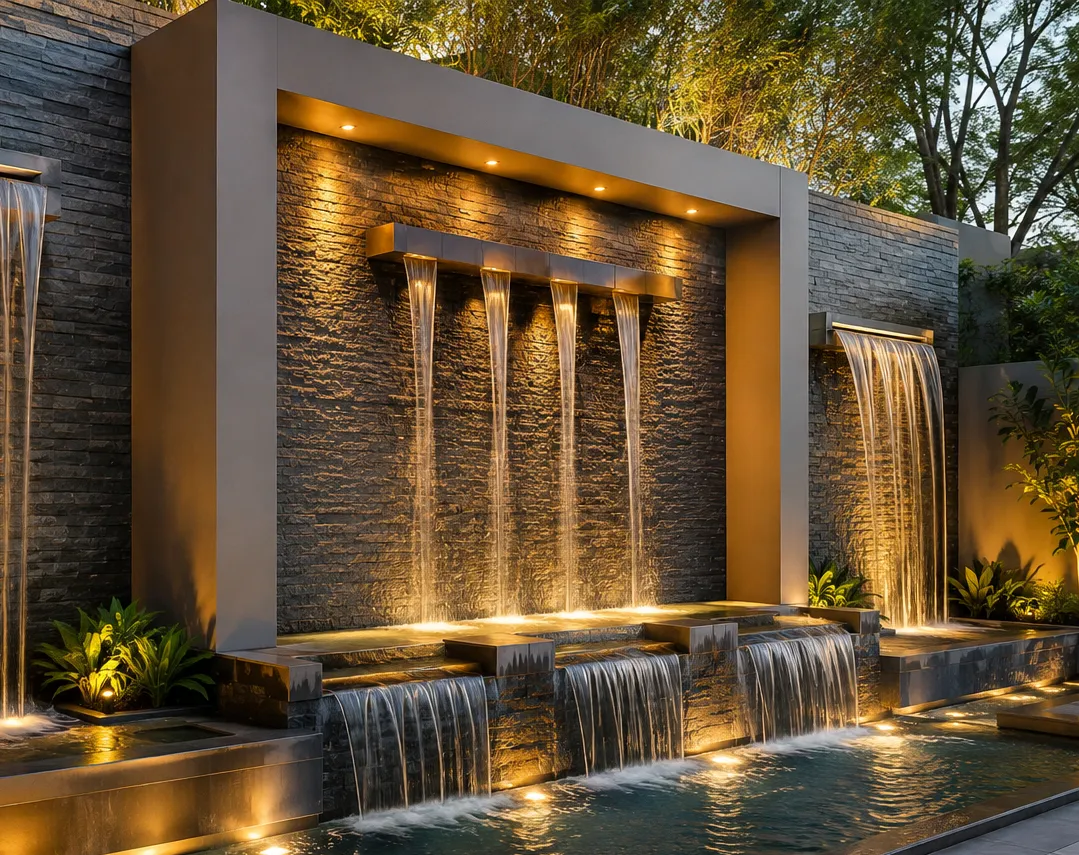
Architecture is usually experienced through structure, material, light, proportion, and movement. Architectural fountains add another dimension by using moving water as part of the built environment rather than treating it as a separate garden ornament.
For architects, builders, developers, hotels, institutions, and commercial establishments in Coimbatore, integrating a fountain early in project planning can produce a more coherent result.
What Makes a Fountain Architectural?
An architectural fountain is designed in relation to the building or surrounding built environment.
Its geometry, materials, water patterns, lighting, and proportions are selected to complement architectural features such as entrance façades, courtyards, walls, columns, plazas, and circulation areas.
The fountain may be visually bold or deliberately understated.
For contemporary buildings, designers may prefer clean lines, stainless steel elements, sheet water, or controlled jets. Traditional developments may use tiered or ornamental forms that suit the architectural language of the property.
Entrance Areas
Building entrances are among the most effective locations for architectural water features.
A fountain positioned along an arrival driveway or near a main entrance can establish a strong first impression before visitors enter the building.
Hotels, resorts, corporate campuses, hospitals, educational institutions, and premium residential developments can use water features to create an identifiable arrival zone.
However, the fountain should not interfere with pedestrian or vehicle circulation. Visibility, access, splash control, and maintenance routes all need consideration.
Internal Courtyards
Courtyards provide an opportunity to introduce water into the centre of a building.
Because these spaces may be visible from several floors or surrounding corridors, the fountain can become a shared architectural focal point.
Lower-height jets, cascades, wall fountains, or sculptural water features can work well where unobstructed views are important.
In healthcare or educational environments, a more restrained water effect may be appropriate compared with the dramatic displays used in entertainment-oriented properties.
Commercial Plazas
Large commercial developments often include open areas between buildings.
Architectural fountains can help give these spaces a clearer identity and provide visual interest within extensive hardscaped environments.
Designers should consider whether people will simply pass through the area or spend time around it. This affects basin height, seating integration, water movement, lighting, and pedestrian separation.
Feature Walls
Not every fountain requires a large floor-level basin.
Vertical wall fountains can introduce moving water where horizontal space is limited. They may be considered for reception areas, courtyards, restaurants, hotels, commercial interiors, and sheltered outdoor walls.
Water flowing across stone, glass, metal, or other appropriate surfaces can create a very different architectural effect from conventional jet fountains.
Scale Is Critical
Architectural water features should respond to the proportions of the building.
A fountain that appears substantial in a showroom may seem insignificant against a multi-storey façade. Conversely, an excessively large fountain can overwhelm a smaller entrance.
Useful factors to evaluate include:
- Building height
- Fountain viewing distance
- Available footprint
- Width of the entrance
- Surrounding landscape
- Pedestrian circulation
- Water jet height
- Nighttime visibility
These decisions are best made before civil work around the fountain area is finalised.
Coordinate Engineering Early
Behind every successful water effect is an engineered circulation system.
Pump capacity, piping, filtration, electrical provisions, drainage, waterproofing, lighting, access points, and control arrangements need to be coordinated with architectural and civil works.
Late changes can make installation more complicated.
For projects in Tamil Nadu, early coordination between architects, contractors, landscape professionals, and fountain specialists can help ensure that the design concept remains practical during execution.
Royal Fountains & Equipments in Coimbatore works with fountain requirements for different types of built environments, including projects where customized design needs to complement architecture and landscape planning.
Well-designed architectural fountains are most successful when water is treated as a building material in its own right. By considering movement, sound, reflection, engineering, and architectural proportion together, designers can create water features that feel naturally connected to the property.
Keywords


