
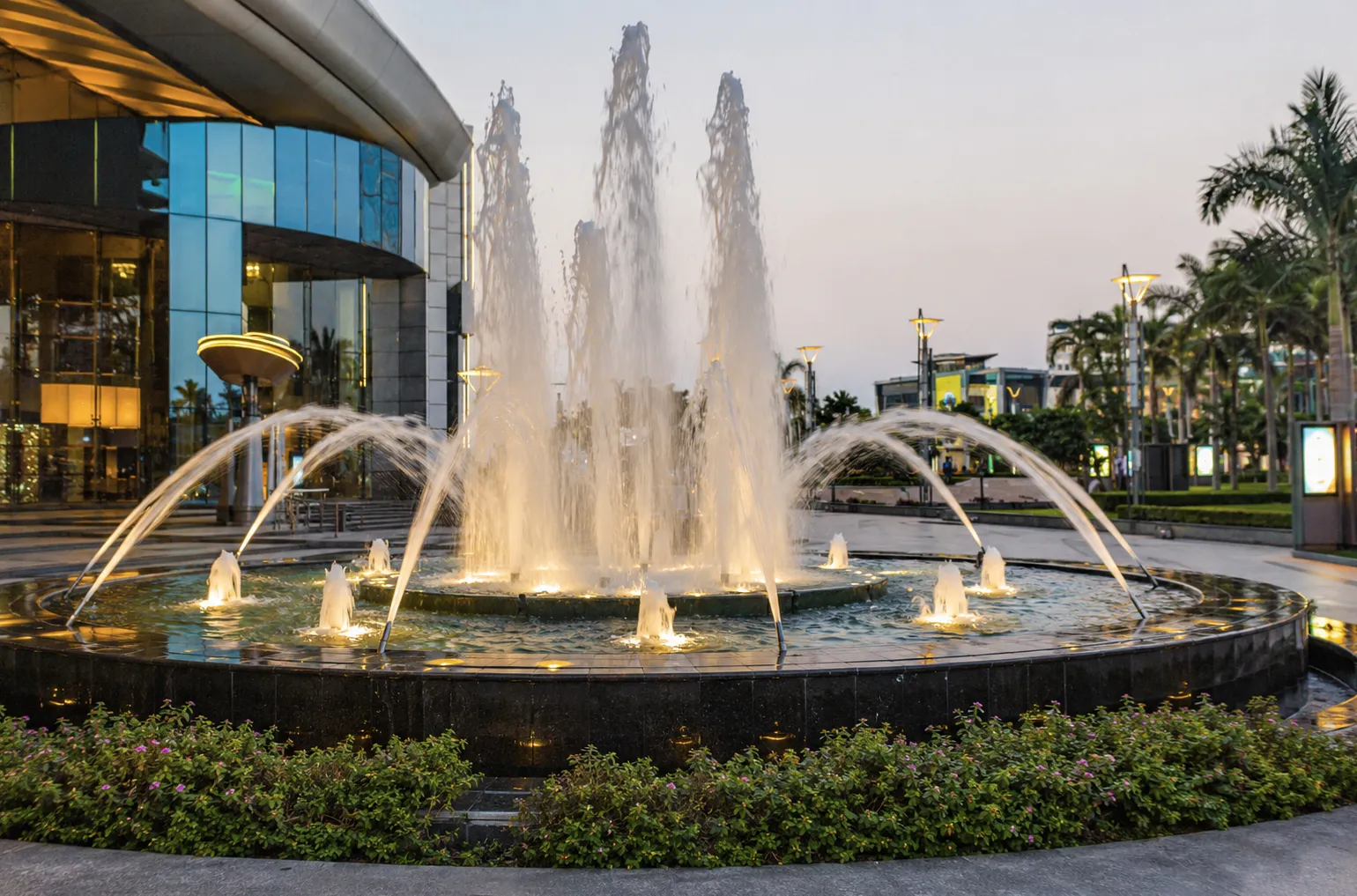
Choosing commercial fountains requires a different approach from selecting a small decorative fountain for a private space. Commercial water features may operate for longer periods, receive greater public exposure, and need to fit into larger architectural and landscape environments.
For properties in Coimbatore, careful planning before procurement can reduce operational difficulties and improve long-term performance.
Start With the Purpose
Before discussing fountain models, define what the water feature is expected to achieve.
A hotel entrance may need a sophisticated arrival feature. A shopping or commercial property might want a visually prominent attraction. A hospital courtyard may favour quieter water movement. An amusement park can require a more energetic display.
The intended experience should determine the water pattern rather than the other way around.
Evaluate the Available Space
Record accurate site dimensions and identify nearby structures, pathways, roads, electrical points, landscaping, and drainage.
Important measurements include:
- Fountain footprint
- Basin depth
- Viewing distance
- Distance from pedestrian areas
- Nearby building height
- Available equipment space
- Electrical service location
These details help determine practical jet heights and fountain proportions.
Check Pump and Hydraulic Planning
The visual effect depends on correct water circulation.
Pump capacity needs to correspond with nozzle quantity, required flow, pressure, and desired water height. An impressive design drawing will not deliver the intended result if hydraulic calculations and component selection are inadequate.
Ask how the proposed system has been planned for the required water pattern.
Understand Filtration
Commercial fountains are exposed to dust, leaves, insects, and other contaminants, particularly in outdoor environments.
Filtration can help maintain water clarity and protect components from debris. The filtration approach should match the basin volume, environment, and expected operating schedule.
Easy access for cleaning is equally important.
Review Materials
Components that remain exposed to water need suitable material selection.
For visible elements, appearance matters, but durability, corrosion resistance, maintenance requirements, and compatibility with the fountain environment are equally important.
The surrounding basin and civil finishes should also be selected for repeated exposure to water.
Plan Lighting at the Same Time
If the fountain will operate in the evening, lighting should form part of the original specification.
Decide whether the project requires restrained illumination, colour-changing effects, or more elaborate lighting coordination.
Hotels, resorts, event properties, and commercial developments in Tamil Nadu may derive considerable visual value from nighttime operation.
Ask About Maintenance Access
Commercial fountains need regular inspection.
Before finalising the system, determine how technicians will reach:
- Pumps
- Filters
- Nozzles
- Lights
- Valves
- Electrical controls
- Drain points
Equipment that cannot be accessed easily can increase maintenance effort over the life of the installation.
Consider Operating Costs
Purchase price is only one part of fountain economics.
Electricity consumption, water replacement, cleaning, preventive maintenance, component replacement, and operating hours all influence ongoing costs.
Rather than selecting solely on initial quotation value, compare the expected operating requirements of different designs.
Look at Project Coordination
Commercial installations usually involve several teams.
Architects, civil contractors, landscape designers, electricians, plumbers, and fountain specialists may all have responsibilities around the same installation.
Clear drawings and coordination before civil work can reduce conflicts.
Royal Fountains & Equipments in Coimbatore provides fountain manufacturing solutions for different property categories, making it useful for project teams to communicate site requirements before selecting a final configuration.
Buying commercial fountains should therefore be treated as an engineering and design decision, not simply a decorative purchase. Define the purpose, study the site, verify hydraulics, evaluate materials, plan maintenance, and understand operating requirements. A fountain selected through this process is far more likely to complement the property and remain practical to operate.
Keywords


